Zacchaeus: A Study in Transformation: Luke 19:1-10

Zacchaeus: A Study in Transformation: Luke 19:1-10

Last week, in the parable of the Lazarus and the rich man, we looked at a rich man who didn’t have a clue.  Every day of his life he feasted luxuriously, all the time ignoring the poor man who camped outside of his gate.  Although he had left overs, he threw them away rather than offering them to Lazarus.  Because he did not show mercy in this life, he failed to receive mercy in the next life. 

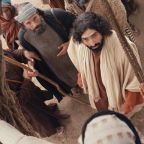
This week we meet Zacchaeus, another rich man who was just as an entitled and selfish as the rich man in the parable, but unlike the first rich man, Zacchaeus met Jesus and had a life changing experience. 
Continue reading Zacchaeus: A Study in Transformation: Luke 19:1-10

Lazarus and the Rich Man: a Study in Entitlement (Luke 16: 19-31)

Lazarus and the Rich Man: a Study in Entitlement (Luke 16: 19-31)

This is a parable of startling contrasts, but its central message is simple: be alert to the needs under your nose. The parable invites us to see ourselves as richer in the goods of the world than many millions.

Without an eye for the needy around us, our life becomes self-centered and callous. Jesus is asking us, his listeners, to open our eyes to what is around us, and to open our ears to the simple command of the Gospel: love your neighbor. Continue reading Lazarus and the Rich Man: a Study in Entitlement (Luke 16: 19-31)

The Lost Son–Luke 15:11-32

The Lost Son–Luke 15:11-32

Our Scripture lesson this morning is usually called “the parable of the prodigal son,” but in my mind, a better title would be “the parable of the lost son.” It is one of three parables that Jesus tells in Luke chapter 15—the parable of the lost sheep, the parable of the lost coin and the parable of the lost son. Each parable has a similar plot. Something is lost, something is found, and then there is a party.

These parables show us the three things about the character of God: 1) God is a God of compassion; 2)
God is a God who loves to party; 3) God is a God of grace. Continue reading The Lost Son–Luke 15:11-32

Unclaimed Baggage

Unclaimed Baggage

All of us carry a great deal of unclaimed baggage around with us every day—wounds inflicted on us from childhood or failed relationships, wounds we have inflicted on our children or spouses, sins and failures of which we are ashamed. Wouldn’t it be wonderful if we could dump all of that baggage at some airport terminal and leave it there? Continue reading Unclaimed Baggage

Of Towers, Fig Trees and Repentance–A Sermon on Luke 13:1-9

Of Towers, Fig Trees and Repentance–A Sermon on Luke 13:1-9

Jesus says, No, the death of the innocents had nothing to do with their sin. However, what he says next is absolutely shocking. “They didn’t sin” Jesus says, “but unless you repent, you will all perish as they did.” And lest we missed it, he repeats it a second time, “unless you repent, you will all perish just as they did.” To be honest Jesus sounds like a fire and brimstone preacher: “Repent or perish! Turn or burn!”

So what does Jesus mean by repentance Continue reading Of Towers, Fig Trees and Repentance–A Sermon on Luke 13:1-9

A Study in Contrasts: The Centurion and the Widow of Nain–Luke 7:1-17

A Study in Contrasts: The Centurion and the Widow of Nain–Luke 7:1-17

The first story, set in Capernaum, deals with people enjoying power and status both from the Roman realm and the Jewish hierarchy.

The scene in Nain is decidedly more rustic and lower class. There is a “large crowd,” but there are no dignitaries, no intermediaries, no prepared speeches.

Thankfully, Jesus doesn’t bother with such distinctions. Continue reading A Study in Contrasts: The Centurion and the Widow of Nain–Luke 7:1-17